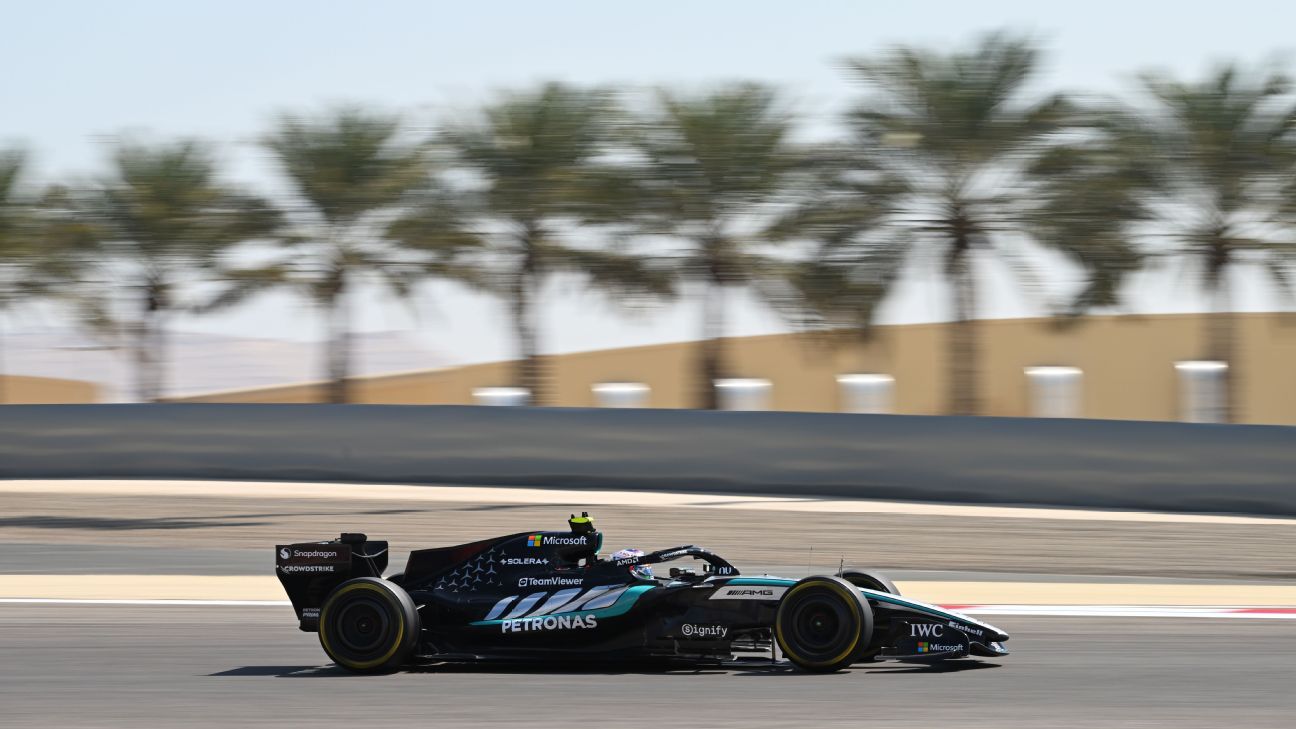
FIA Clarifies Mercedes F1 Engine Rules: Unpacking the Compression Ratio Debate Ahead of 2026
In the high-stakes world of Formula 1, where every millisecond and every millibar counts, the precision of technical regulations is paramount. Recently, a significant point of discussion has emerged concerning the intricate details of the upcoming 2026 F1 engine regulations, specifically revolving around the internal combustion engine's compression ratio. At the heart of this unfolding narrative is the f1 mercedes engine, its innovative design, and the FIA's proactive stance in ensuring regulatory clarity long before the new era even begins.
The controversy, which gained traction in the weeks leading up to pre-season testing, centres on the allegation that while Mercedes' new power unit complies with the stipulated 16:1 compression ratio limit during static, ambient temperature tests, it might achieve a higher ratio once operational. This perceived "loophole" ignited a fervent debate within the paddock, forcing the FIA to step in and provide crucial clarifications, emphasizing the spirit and intent of the rules rather than just their literal interpretation.
The Heart of the Matter: Compression Ratio and the 2026 Regulations
To fully grasp the essence of this debate, it's essential to understand what compression ratio entails and its significance in engine performance. The compression ratio is defined as the ratio between the cylinder's maximum volume (when the piston is at the bottom of its stroke) and its minimum volume (when the piston is at the top). A higher compression ratio generally translates to greater thermal efficiency, meaning more power generated from the same amount of fuel.
For the 2026 F1 engine regulations, the FIA made a deliberate decision to reduce the maximum geometric compression ratio to 16:1, down from 18:1 under previous rules. This reduction was partly aimed at making the new power units more accessible and achievable for new entrants into the sport. Article C5.4.3 of the 2026 regulations explicitly states: “No cylinder of the engine may have a geometric compression ratio higher than 16.0. The procedure to measure this value will be detailed by each PU manufacturer according to the guidance document FIA-F1-DOC-C042 and executed at ambient temperature. This procedure must be approved by the FIA technical department and included in the PU manufacturer homologation dossier.”
The crucial phrase here, and the source of the recent "loophole" discussions, is "executed at ambient temperature." It is suggested that Mercedes (and potentially other manufacturers like Red Bull Powertrains) may have engineered their mercedes f1 engine in a way that, while perfectly compliant at ambient temperatures, allows the compression ratio to subtly increase under the extreme heat and dynamic stresses of an operational engine. This potential disparity between static compliance and dynamic performance is what sparked the regulatory review.
Mercedes' Stance and the FIA's Proactive Response
During the initial week of pre-season testing in Bahrain, Mercedes team principal Toto Wolff addressed the burgeoning controversy head-on. He firmly asserted that Mercedes had maintained constant communication with the FIA throughout the entire development process of their new power unit. Wolff expressed absolute confidence in the legality of his team's engine, famously describing the entire situation as a "storm in a teacup."
However, the fact that the FIA felt compelled to initiate a vote on the matter, even with Mercedes' assurances, indicates the complexity and sensitive nature of the issue. Nikolas Tombazis, the FIA’s single-seater director, shed light on the regulator's perspective when questioned by Autosport. He clarified that the discussion wasn't about any manufacturer "cheating" or "breaking the rules." Instead, it was a classic case of the regulations needing clarification to fully achieve their intended objective.
"There are a lot of nuances when discussing such a matter, because there's what the regulations intend to be, and to keep the compression ratio at 16:1 was one of the core objectives when the regulations were discussed with the PU manufacturers back in 2022, when they were finalised," Tombazis explained. "And there's also a topic of exactly what's written in the regulation. It became obvious that with what was written in the regulations, there could be ways that one could have a higher compression ratio."
This statement perfectly encapsulates the perennial challenge in Formula 1: the constant interplay between the letter of the law and its spirit. Engineers, driven by competitive instinct, will always seek to maximize performance within the confines of what is explicitly written, often pushing boundaries that regulators might not have fully foreseen.
The Broader Implications: Loopholes, Evolution, and Fair Play
This episode serves as a powerful reminder of the dynamic and often adversarial relationship between regulators and competitors in F1. With potentially "hundreds of team members" diligently scrutinizing and interpreting regulations, versus a smaller group of "20 FIA employees" attempting to close off all potential avenues for exploitation, such situations are almost inevitable. It's not necessarily about malicious intent, but about the relentless pursuit of competitive advantage.
The FIA's swift action to clarify the rules, even before the 2026 season begins, is crucial for maintaining a level playing field and preventing future disputes. Tombazis stressed the FIA's philosophy: "When the rules need improving, because they don't achieve fully the objective, we try to make amendments. We want to keep the rules focused on what the objective is, and not to be evolving gradually when interpretations have maybe stretched them a bit in one or the other direction."
This proactive approach helps to ensure that the core objectives of the 2026 regulations – which include greater sustainability, cost control, and attracting new manufacturers – are not undermined by unintended loopholes. Had this issue been left unaddressed, it could have led to significant competitive imbalances, escalating development costs, and potentially legal challenges down the line.
What This Means for F1 Engine Development
- Early Intervention is Key: The FIA's willingness to clarify regulations well in advance of their implementation is a positive step, preventing costly redesigns and disputes closer to the season start.
- Emphasis on Regulatory Intent: This incident reinforces that F1 regulations are not merely a list of rules but embody an underlying philosophy and set of objectives. Teams must consider both the literal wording and the intended purpose.
- Continuous Dialogue: The saga highlights the importance of ongoing communication between manufacturers and the FIA during the development phase. Mercedes engaging the FIA early mitigated the "cheating" narrative.
- Dynamic Nature of Rules: F1's technical regulations are living documents, constantly evolving to close loopholes, address unforeseen circumstances, and adapt to technological advancements.
- Fair Play for New Entrants: By clarifying the compression ratio rule, the FIA ensures that new manufacturers entering F1 in 2026 are not immediately disadvantaged by established teams exploiting nuanced interpretations.
Ultimately, the FIA's clarification regarding the f1 mercedes engine compression ratio for 2026 is a testament to the sport's commitment to fair competition and robust governance. It underscores the perpetual cat-and-mouse game between engineers pushing the boundaries of innovation and regulators striving to maintain the integrity of the rules. As F1 hurtles towards its exciting new engine era in 2026, clear, unambiguous regulations will be vital for a truly competitive and thrilling championship.